
Is a 20 kW Generator Enough for a Home in Dallas?
October 30, 2026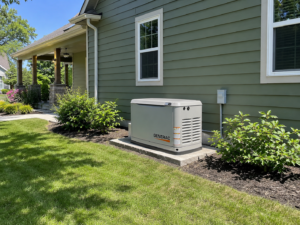 A 20 kW generator may provide enough backup power for your Dallas home, especially if you manage major appliance use rather than running everything at once. However, homes with multiple air conditioners, electric heating, or several high-demand appliances may need more capacity.
Choosing a 20 kW generator for a Dallas house requires understanding which appliances need power, how much electricity they consume, and whether they must run together.
Table of Contents
-
What Can a 20 kW Generator Power?
-
Understanding Running & Starting Loads
-
When Is a 20 kW Generator Enough?
-
How Fuel Type Affects Generator Output
-
Frequently Asked Questions
-
Schedule a Free Generator Evaluation
The following sections explain how a 20 kW system handles common household loads and what can limit its capacity.
What Can a 20 kW Generator Power?
A 20 kW whole-house generator has a nominal capacity of 20,000 watts, although actual output depends on the model and fuel source.
For Dallas homeowners, the biggest consideration is simultaneous electricity use. Air conditioning, refrigeration, cooking, lighting, and home-office equipment may all need power during an outage.
Hypothetical Household Electrical Load Table
The following example illustrates potential running loads in a Dallas home. These figures are hypothetical, not verified appliance ratings or a generator sizing recommendation.
Household Equipment/Hypothetical Running Demand
Central air conditioning and blower/5,000 watts
Refrigerator and freezer/700 watts
Electric oven and cooktop/5,000 watts
Lighting throughout the home/800 watts
Home-office computers and networking/600 watts
Other household electronics/900 watts
Total simultaneous running demand/13,000 watts
This example leaves an extra 7,000 watts below a 20 kW rating. However, that difference cannot automatically be treated as available starting capacity. Compressor startup, additional appliances, and the generator’s actual fuel-specific rating must also be considered.
Gas Appliances Versus Electric Appliances
Fuel type significantly changes household electrical demand.
A natural-gas furnace generally needs electricity for its blower and controls, but not for electric resistance heating. Similarly, gas water heaters and gas cooking appliances may require relatively little electricity compared with electric equivalents.
Electric water heaters, ovens, clothes dryers, and resistance heating can add substantial loads.
This distinction matters when evaluating residential standby generators for homes with different appliance configurations.
Understanding Running & Starting Loads
Running watts describe the electricity equipment consumes during normal operation. Starting demand is the additional power some motors require when switching on.
Air conditioners, refrigerators, and pumps can draw substantially more electricity during startup than during continuous operation. Generac, a leading generator manufacturer, notes that certain motorized appliances may require three to four times their running wattage when starting.
Why HVAC Startup Matters in Dallas
Air conditioning often represents one of the largest electrical loads in a Dallas home. A generator might support an air conditioner, refrigerator, and household electronics during normal operation but struggle if multiple compressors start simultaneously.
Homes with two HVAC systems require particular attention. Their combined running demand may be manageable, while simultaneous startup could exceed the generator’s capabilities.
Managed Versus Simultaneous Operation
Load management can make 20 kW standby generators practical for households that would otherwise exceed their available capacity. Compatible controls prioritize electrical loads, temporarily disconnect certain appliances, and stagger operation to reduce overload risks.
For example, homeowners might prioritize cooling and refrigeration while delaying an electric water heater or clothes dryer. Load management does not increase generator output. It changes when connected equipment can operate.
When Is a 20 kW Generator Enough?
The answer depends on your household’s electrical equipment and expectations during an outage.
When 20 kW May Be Sufficient
 A 20 kW generator may accommodate a home with one central HVAC system, typical refrigeration, lighting, internet equipment, and selected kitchen appliances. Homes with gas heating, gas cooking, or gas water heating may have lower electrical demands.
A professionally designed load management system can also help households run essential equipment without running every major appliance simultaneously.
When 20 kW May Fall Short
A 20 kW system may be insufficient when homeowners expect multiple HVAC units, electric resistance heating, electric cooking equipment, pool pumps, and other large loads to operate together. Additional equipment, including EV chargers and electric tankless water heaters, can further increase demand.
The appropriate whole-house generator size in Dallas cannot be determined by square footage alone. Generator sizing must consider actual equipment ratings, starting demands, fuel supply, and household priorities.
How Fuel Type Affects Generator Output
A generator advertised as 20 kW may produce less electricity if it runs on natural gas instead of propane. For example, Generac’s Guardian model G007077-1 is rated for 20 kW on liquid propane but 17 kW on natural gas. Other Generac 20 kW models have different ratings, including 18 kW on natural gas.
Always verify the specific model’s specifications, fuel configuration, and available output before selecting equipment. Gas supply capacity also matters. Our Dallas regional generator team can evaluate these factors during an on-site assessment.
Frequently Asked Questions
These answers address common questions about 20 kW generator capacity and household electrical needs.
Is a 20 kW Generator Enough for Two Air Conditioners?
Possibly. The answer depends on each system’s running wattage, startup requirements, and other connected loads. Load management may allow both systems to operate at different times.
Can a 20 kW Generator Run an Electric Stove?
Yes, potentially. However, electric cooking equipment can consume several thousand watts, reducing capacity available for HVAC and other appliances.
Should I Choose a Generator Based on My Home’s Size?
No. As detailed in this article, our assessment focuses on actual electrical demand rather than square footage alone.
Schedule a Free Generator Evaluation in Dallas
Are you considering having a whole-house generator installed at your Dallas home? Tri-State Water, Power & Air has served Dallas homeowners since 1992 and offers free on-site generator assessments and estimates tailored to individual households.
Schedule a generator evaluation with our team to determine whether 20 kW meets your backup power needs. You can also reference our Dallas home generator cost calculator when planning your project.