
How to Prepare Your Standby Generator Before Storm Season
July 28, 2026To prepare your standby generator before storm season, schedule professional maintenance, confirm the generator is completing its regular system checks, clear debris from around the unit, review fuel readiness, check for warning lights or visible damage, test carbon monoxide alarms, and make sure the generator is ready to support the systems it was installed to power.
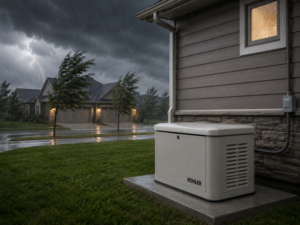
A standby generator is designed to provide automatic backup power when the utility grid goes down, but it still needs routine care before severe weather arrives. The worst time to discover a weak battery, blocked airflow, low fluid level, fault code, or maintenance issue is during a thunderstorm, ice storm, tornado warning, or extended outage.
Tri-State Water, Power & Air explains that its standby generators are permanent systems installed outside the home by licensed technicians. They run on propane or natural gas, turn on automatically when power goes out, and can help keep lights, HVAC, refrigeration, security systems, medical equipment, and other electronics running during an outage. Tri-State also notes that its standby generator products feature weekly system checks, automatic transfer switches, remote control monitors, and rust-resistant outer casings.
Storm season generator preparation is not about do-it-yourself electrical or mechanical repair. It is about making sure the generator area is clear, the system is being maintained, alerts are addressed, fuel access is ready, and professional service is scheduled before severe weather puts the system to the test.
What Should Home Generator Owners Do Before Storm Season?
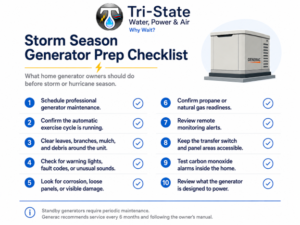
Before storm or hurricane season, homeowners should have their standby generator inspected and serviced by a qualified generator professional. The generator should be checked for proper operation, maintenance needs, warning lights, battery condition, fluid levels, transfer switch function, fuel readiness, airflow restrictions, visible damage, and monitoring alerts.
A hurricane/storm season generator checklist should include:
- Schedule professional generator maintenance before severe weather arrives
- Confirm the generator is completing its regular system check or exercise cycle
- Clear leaves, branches, grass clippings, mulch, weeds, and stored items from around the unit
- Check for warning lights, fault codes, unusual sounds, corrosion, loose panels, or visible damage
- Confirm propane or natural gas readiness based on the home’s fuel setup
- Review remote monitoring alerts if the system has monitoring enabled
- Make sure the transfer switch and electrical panel areas are accessible
- Test carbon monoxide alarms inside the home
- Review what the generator is designed to power
- Contact Tri-State if the system has not been serviced recently, shows an alert, or fails to exercise properly
Generac states that all generators require periodic maintenance, including oil and filter changes, and recommends service every 6 months by an authorized independent service dealer while following the owner’s manual.
Why Storm Season Generator Prep Matters
Hurricanes and storms can cause power outages in several ways. High winds can bring down trees and utility lines. Ice can weigh down branches and power infrastructure. Lightning can affect electrical systems. Tornadoes and severe thunderstorms can cause widespread utility disruptions. Most US power outages are caused by ice storms, thunderstorms, and tornadoes, along with equipment failure and damage from birds, wildlife, trees, vegetation, and digging for underground lines.
A standby generator may remain in standby mode for long periods between outages. Regular exercise cycles help the system stay ready, but those checks do not replace generator service or maintenance. If the generator has a weak battery, blocked ventilation, low fluid, worn component, fault code, or fuel issue, it may not perform as expected when the power goes out.
Preparing Your Generator Before Severe Weather Reduces Risk of Backup Power Issues
Storm season preparation helps reduce the risk of preventable generator problems. It also gives homeowners time to schedule service before demand increases. Once severe weather is in the forecast, service schedules may become tighter, parts may take longer to source, and emergency needs may take priority.
For households that rely on backup power for refrigeration, heating or cooling, medical equipment, security systems, lighting, internet equipment, sump pumps, or other essentials, preparation is especially important. A standby generator is a major home system, and storm readiness should be treated like seasonal HVAC maintenance, roof inspection, or other critical home safety preparation.
Schedule Professional Standby Generator Maintenance Near You
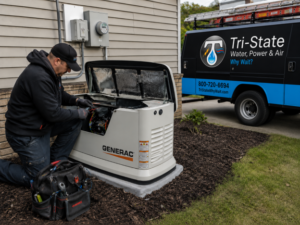
The most important step before storm season is scheduling professional standby generator maintenance from a local generator technician. A trained generator servicemen can inspect, test, and service the system before it is needed during an outage.
Professional home generator maintenance may include checking oil and filter needs, inspecting the battery, reviewing fluid levels, testing system operation, checking visible components, reviewing alert history, inspecting the enclosure, and confirming that the unit is ready for automatic operation. The exact standby generator maintenance steps depend on the generator model, manufacturer schedule, system age, fuel setup, and previous service history.
Generac, a leading home generator brand that Tri State carries, claims that generators require periodic maintenance to support performance and reliable service, including oil and filter changes. Generac also recommends service every 6 months by an authorized independent service dealer, with routine maintenance procedures and schedules based on the owner’s manual.
Tri-State Water, Power & Air states that its professionals are trained and certified in generator repairs of all types, including whole home Generac generators. Tri-State can assist with generator replacement, parts replacement, low fluid levels, testing, maintenance, and generator repairs. Regular scheduled generator service and maintenance is important to the life and capability of a home generator.
Homeowners should not wait until severe weather is already in the forecast to request assistance with preparing their generator for storm season. If a home standby generator has not been maintained recently, has shown warning lights, or did not perform well during a past outage, scheduling service early is the smarter option.
Make Sure the Generator Exercise Cycle Is Working
Homeowners do not need to diagnose internal generator problems themselves, but they should pay attention to whether the system is behaving normally. If the generator usually exercises on a certain day and suddenly stops doing so, runs unusually, sounds different, displays a warning light, or sends a monitoring alert, that should not be ignored.
A skipped or failed exercise cycle can point to several possible issues, including battery trouble, a system fault, maintenance needs, or another service-related concern. The right response is to contact a qualified generator service provider rather than wait for the next outage.
If the generator is equipped with a remote monitoring feature, like the Generac and Kohler generator models Tri State offers, homeowners should also confirm that alerts are being received and reviewed. Remote monitoring can be useful only when the homeowner or service provider knows the system status and responds when an issue appears.
Review Remote Monitoring and Generator Alerts
Remote monitoring can help homeowners stay informed about generator performance, but it should be reviewed before storm season. Tri-State standby generator products include remote control monitors that provide a visual indication of generator performance status. Tri-State also offers 24/365 remote monitoring available for the first year on listed generator size sections.
If your standby generator has monitoring enabled, confirm that the system is connected, alerts are active, and contact information is current. If you have not checked the monitoring app, account, or display in a while, storm season is a practical time to review it.
Do not ignore alerts just because the generator still appears normal from the outside. A monitoring notice may point to a service need that should be addressed before the next outage. If you are not sure what an alert means, contact Tri-State or your generator service provider instead of clearing or dismissing it without follow-up.
Remote monitoring is helpful, but it should not replace professional maintenance. Think of it as an added layer of awareness, not a substitute for inspection, testing, and service.
Clear the Area Around the Standby Generator
A standby generator needs open airflow to operate properly. Before storm season, homeowners should walk around the unit and make sure leaves, grass clippings, mulch, weeds, branches, stored items, lawn tools, patio furniture, trash cans, fencing materials, or storm debris are not crowding the generator.
Good airflow matters because the generator produces heat and exhaust during operation. If vents or access panels are blocked, the system may not be able to operate as intended. Blocked access can also make it harder for technicians to service the unit before or after a storm.
Ensure Generator Area Has Proper Ventilation and Drainage
Electrical Safety Foundation International advises that generators need clear space above and on all sides for proper ventilation and should not be operated in enclosed spaces. ESFI also says generators should be kept away from doors, windows, and vents.
The generator should also be checked for drainage concerns. Downspouts, roof runoff, heavy mulch buildup, and low areas near the unit can allow water to collect around the generator. If stormwater regularly pools near the unit, that should be reviewed by a professional before severe weather becomes more frequent.
Homeowners should avoid building tight enclosures, placing decorative screens too close to the generator, or planting shrubs in a way that limits airflow or service access. A whole house generator may look better when hidden, but it still needs room to breathe and room for technicians to work.
Check for Visible Generator Warning Signs
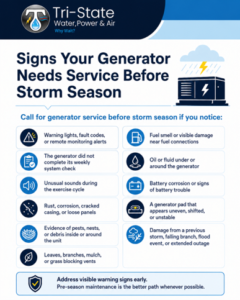
A visual check can help homeowners identify problems that need professional attention before storm season. This does not mean opening electrical components, adjusting gas connections, or attempting generator repair. It simply means noticing obvious signs that something may be wrong.
Call for generator service before storm season if you notice:
- Warning lights, fault codes, or remote monitoring alerts
- The generator did not complete its weekly system check
- Unusual sounds during the exercise cycle
- Rust, corrosion, cracked casing, or loose panels
- Evidence of pests, nests, or debris inside or around the unit
- Leaves, branches, mulch, or grass blocking vents
- Fuel smell or visible damage near fuel connections
- Oil or fluid under or around the generator
- Battery corrosion or signs of battery trouble
- A generator pad that appears uneven, shifted, or unstable
- Damage from a previous storm, falling branch, flood event, or extended outage
Visible warning signs should be addressed early. Waiting until an outage can turn a manageable service issue into an emergency service call. Tri-State offers 24/7 emergency generator services, so homeowners may be able to get help when problems occur, but pre-season maintenance is still the better path whenever possible.
Verify Generator Fuel Readiness Before Severe Weather
Standby generators commonly run on natural gas or propane. Before storm season, homeowners should understand which fuel source their generator uses and whether there are any obvious readiness concerns.
For propane systems, this may include confirming the tank level before severe weather arrives and making sure delivery access is not blocked. For natural gas systems, homeowners should avoid making assumptions about capacity or attempting fuel-line work themselves. Any concern about fuel supply, gas pressure, fuel routing, or fuel-line condition should be reviewed by qualified professionals.
Fuel readiness is especially important for homeowners who have added new appliances, changed home power needs, or experienced generator performance concerns during a previous outage. A home generator system that was sized and installed for one set of power needs may need professional review if the household’s electrical demand has changed significantly.
Homeowners should not expect a standby generator to power more than it was designed and configured to support. The generator’s fuel source, system size, transfer switch setup, and connected loads all matter.
Test Carbon Monoxide Alarms and Review Home Safety
A properly installed standby generator is located outside, but carbon monoxide safety still belongs in any storm season generator preparation plan. Carbon monoxide cannot be seen or smelled, and generator exhaust should always be treated seriously.
The Red Cross advises that fuel-burning devices should never be used inside a home, garage, basement, crawlspace, or partially enclosed area. It also recommends keeping these devices outdoors and away from doors, windows, and vents that could allow carbon monoxide to enter the home. The Red Cross further recommends installing carbon monoxide alarms in central locations on every level of the home and outside sleeping areas, testing batteries frequently, and moving quickly to fresh air if an alarm sounds.
ESFI also warns that improper generator use or installation could cause carbon monoxide poisoning and recommends carbon monoxide alarms outside sleeping areas and on every level of the home.
For homeowners with a standby generator, storm season is a good time to test carbon monoxide alarms, replace batteries if needed, check alarm expiration dates when applicable, and make sure household members understand what to do if an alarm sounds. If there is any concern about generator exhaust direction, placement, or nearby openings, request a professional evaluation.
Confirm What Your Generator Is Supposed to Power
Before storm season, homeowners should review what their standby generator is designed to support. Some generators are configured for essential circuits. Others may be sized and installed for broader whole-home backup power. Tri-State standby generators can run a couple of basics or power the entire home depending on the setup.
This distinction matters during outages. A homeowner who expects the generator to run every major appliance, HVAC system, kitchen circuit, and electronic device may be disappointed if the system was originally configured only for essential loads. On the other hand, a properly sized whole-home generator may support a wider range of systems depending on its capacity and installation.
Common backup power priorities may include refrigeration, select lighting, HVAC, medical equipment, security systems, sump pumps, internet equipment, and essential kitchen circuits. The exact list depends on the generator size, transfer switch configuration, home electrical layout, and the homeowner’s goals at the time of installation.
If your needs have changed since the generator was installed, schedule a review before storm season. Examples include adding a major appliance, finishing part of the home, adding medical equipment, changing HVAC equipment, or wanting more circuits supported during an outage.
Make Sure the Transfer Switch Area Is Accessible
The transfer switch is a critical part of a standby generator system. It allows the home to transition safely between utility power and generator power. Tri-State automatic transfer switches detect when the home loses power, start the generator, and shut it down when power is restored by the utility company.
ESFI states that transfer switches are the only way to safely power a home’s electrical system and help prevent backfeeding, which can endanger utility workers and nearby properties. The Red Cross also warns against backfeeding by trying to power house wiring through a wall outlet.
Before storm season, make sure the transfer switch, electrical panel, and generator access areas are not blocked by storage, furniture, boxes, tools, or household items. A technician may need to reach these areas during maintenance or service.
Homeowners should not attempt electrical adjustments or transfer switch repair. If the transfer switch, panel, wiring, or generator display shows damage or warning signs, contact a qualified professional.
Create a Storm Outage Plan for Your Household
A standby generator is only one part of storm readiness. Homeowners should also have a clear outage plan for the household. This is especially important for families with children, older adults, medical equipment, pets, refrigerated medication, home offices, or security systems.
Start by reviewing which systems the generator is intended to power. Make sure family members understand that the generator may not support every outlet or appliance unless it was sized and configured for whole-home backup. If some circuits are not connected to backup power, identify them before the next outage.
Charge phones and backup batteries, test flashlights, review carbon monoxide alarm locations, and make sure essential medications, emergency supplies, and important documents are easy to access.
Keep Tri-State’s generator service number, 877-301-7693, available in a phone contact list and written emergency list. If the power goes out and the generator does not operate as expected, you do not want to search for service information during severe weather.
A good outage plan should not depend on guesswork. Know what your generator powers, know who to call, and know what warning signs require service.
When Should You Call for Generator Service Before Storm Season?
Homeowners should call for standby generator service before storm season if the system has not been maintained recently, has displayed an alert, or has shown any unusual behavior. A standby generator is designed to work automatically, but it should not be ignored until an outage happens.
Schedule generator service if:
- The generator has not been serviced recently
- The generator failed or skipped its regular exercise cycle
- Warning lights, fault codes, or monitoring alerts appear
- The unit sounds unusual during testing
- You see fluid, corrosion, pest activity, or visible damage
- The battery has not been checked
- You are unsure whether remote monitoring is working
- The generator ran for an extended period during a previous outage
- The system was exposed to flooding, falling limbs, or storm debris
- You added major electrical loads after the generator was installed
- The generator did not perform as expected during a past outage
Tri-State professionals are trained and certified in generator repairs of any generator model we carry, including the major brands like Kohler and Generac.
Calling before storm season gives homeowners more time to address problems, schedule maintenance, and prepare for severe weather with greater confidence.
What Not to Do With a Home Generator Before Storm Season
Storm season can create urgency, but homeowners should avoid shortcuts that create safety or reliability problems. A standby generator is connected to electrical and fuel systems, so repair and installation work should be handled by qualified professionals.
- Do not ignore warning lights or fault codes.
- Do not assume a failed exercise cycle will resolve itself.
- Do not wait until severe weather is already forecast to request routine maintenance.
- Do not block the generator with patio items, fencing, shrubs, mulch, trash cans, or stored equipment.
- Do not attempt electrical, transfer switch, or fuel-line repairs yourself.
- Do not assume the generator will power newly added appliances unless the system has been professionally reviewed.
Homeowners should also avoid treating the generator as a primary power source. Generac states that a backup generator is designed as backup to utility power only and should not be used as a primary power source.
Preparation should focus on safe inspection, professional maintenance, clear access, monitoring review, fuel readiness, and household planning.
Standby Generator Storm Season FAQs
How often should a standby generator be serviced?
Standby generator maintenance schedules vary by generator model, manufacturer requirements, use, and system conditions.Generac informs homeowners that all generators require periodic maintenance and recommend service every 6 months by an authorized independent service dealer like Tri State.
Should I service my generator before storm season?
Yes. Servicing a standby generator before storm season gives a professional time to check the system before outages are more likely. This is especially important if the generator has not been serviced recently, has displayed alerts, or did not perform as expected during a previous outage.
What happens if my standby generator does not run its weekly test?
If the home generator does not run its regular exercise cycle, schedule service. A skipped or failed test may indicate a battery issue, system fault, maintenance need, or other condition that should be reviewed before the next outage.
How do I know if my generator battery is weak?
Some whole house generator systems may show alerts or performance symptoms related to the battery, but homeowners should not rely on guesswork. A Tri State generator technician can test the battery during maintenance and determine whether replacement or further service is needed.
Can heavy rain damage a standby generator?
Standby generators are installed outdoors and are built to operate in outdoor conditions, but drainage, flooding, debris, and physical storm damage can still create problems. If the unit has been exposed to standing water, flood conditions, falling limbs, or visible damage, schedule a professional standby generator inspection.
Should I clear leaves and branches around my generator?
Yes. Leaves, branches, weeds, mulch, and stored items can block airflow and service access. ESFI advises that generators need clear space above and on all sides for proper ventilation.
How much space should be around a standby generator?
Required clearance depends on the generator model, manufacturer instructions, local code, and installation conditions. Homeowners should not rely on a universal measurement without confirming it for their specific system. A generator professional can confirm whether the area around the unit is clear enough.
What should I do if my generator shows a warning light?
Contact a generator service professional. Warning lights, fault codes, or monitoring alerts should be reviewed before storm season, especially if the generator has not been serviced recently or has failed an exercise cycle.
Can a standby generator run my whole house during a storm?
It depends on the generator size, transfer switch setup, home electrical demand, fuel source, and how the system was installed. Tri-State standby generators can run a couple of basic appliances or power the entire home depending on the setup.
Who should I call if my generator does not turn on during an outage?
If your standby generator does not turn on during an outage, contact Tri-State Water, Power & Air for generator service. Tri-State generator services can help with testing, maintenance, repairs, parts replacement, low fluid levels, and other generator issues.
Schedule Standby Generator Maintenance with Tri-State Before Storm Season
A standby generator can help protect comfort, safety, food storage, medical equipment, security systems, and essential home power during an outage, but it should be prepared before severe weather arrives. Storm season generator preparation includes professional maintenance, regular system check review, fuel readiness, clear airflow, monitoring review, transfer switch access, carbon monoxide alarm testing, and a clear household outage plan.
Tri-State Water, Power & Air provides standby generator installation, testing, maintenance, repair, and generator service. If your generator has not been serviced recently, is showing an alert, failed a system check, or needs inspection before storm season, schedule generator service with Tri-State Water, Power & Air or call 800-720-6694