
Kansas City Generator Buying Checklist
October 07, 2026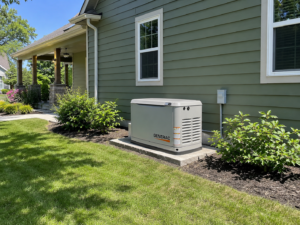 Kansas City weather can test your home’s power supply. Strong thunderstorms, summer heat, winter cold, ice, and wind can all cause outages, and homeowners outside the urban core may have a long wait before service is restored.
A whole-house generator gives you an automatic source of backup power when utility service goes down. If you’re in the market for a standby generator for your Kansas City home, use this checklist to identify what your home needs and the key questions you should ask an installer.
Why Kansas City Homeowners Consider Backup Generators
An outage that lasts a few minutes is inconvenient. One that stretches into hours or days can affect your heating and cooling, refrigeration, lighting, internet connection, sump pump, and other equipment you depend on.
A standby generator offers a more convenient solution than setting up a portable generator in bad weather. It remains outside your home and works with an automatic transfer switch to respond when utility power is interrupted.
Once you’ve decided backup power makes sense, the following checklist can help you shop with confidence.
Generator Buying Checklist
Don’t choose a generator based on one specification or advertised feature. Your home’s electrical demands, fuel availability, installation site, and long-term service needs all matter.
1. Identify Your Home’s Power Needs
Square footage alone doesn’t determine the generator capacity you need. Two similarly sized houses can have very different electrical demands depending on their HVAC equipment, appliances, pumps, and how the families use electricity. Schedule an on-site assessment instead of sizing a system by square footage alone.
Start your Kansas City generator sizing process by deciding what you expect to keep running. Options include:
-
Essential circuits – Identify necessities such as refrigerators, freezers, lighting, furnaces, sump pumps, and medical equipment.
-
HVAC equipment – Consider whether you want to continue running central heating and cooling during an outage.
-
Major appliances – Account for electric ranges, water heaters, well pumps, and other high-demand equipment you expect to use.
-
Whole-home coverage – Decide whether you want essential-load backup or enough capacity to support most of your normal routine.
A professional load calculation can then account for running loads and the higher startup demands of certain equipment.
2. Check Your Fuel Source & Connection Requirements
Most residential standby generators use natural gas or propane. If your home doesn’t have an existing fuel source, your installer can coordinate a propane solution.
If you have natural gas, your installer should evaluate the existing service and connection requirements. For propane, you’ll need an appropriately sized tank and fuel connection.
This step can narrow your choices among Kansas City generators before you start comparing individual models.
3. Review the Transfer Switch & Electrical System
An automatic transfer switch is a key part of a standby generator system. It detects a utility outage, allows the generator to supply the home, and transitions the electrical system back after utility power returns.
Check Electrical Compatibility
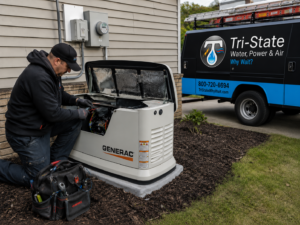 Your installer should evaluate your electrical panel, service capacity, desired backup loads, and transfer switch requirements. Existing electrical equipment can affect both system design and installation complexity.
That evaluation also helps identify electrical upgrades that may be necessary before installation begins.
4. Evaluate the Installation Site & Local Requirements
A whole-house generator needs an appropriate outdoor location with required clearances and access to electrical and fuel connections. Placement can affect the amount of wiring, piping, trenching, and site preparation involved.
Kansas City, Missouri, requires permits before most regulated electrical work begins, with inspections required for applicable projects. The city has also adopted standards addressing emergency and standby power systems.
If you live elsewhere in the Kansas City metro area, requirements may differ by municipality. A local installer should identify the codes and permitting rules that apply at your address.
5. Consider Maintenance & Long-Term Reliability
A generator isn’t something you want to install and forget about until an emergency. Regular testing and maintenance help keep the system ready. Most modern standby generators perform weekly diagnostic checks, and the installation company often provides ongoing maintenance and 24/7 emergency generator service.
Plan Beyond Installation Day
Before purchasing, ask who will service the generator after installation and how quickly help is available when something goes wrong. Having installation and ongoing support available from the same company can simplify ownership.
6. Understand What Affects Generator Cost
Don’t compare generators for sale in Kansas City solely by the equipment price. The total project depends on what your home requires.
Important cost factors include generator size and power capacity, electrical panel compatibility, transfer switch requirements, installation complexity, fuel connections, permitting, local code requirements, and future maintenance.
A site evaluation provides a clearer picture because it accounts for your home’s electrical infrastructure and installation conditions.
7. Choose a Local Generator Installer
The equipment is only part of your investment. Your installer is responsible for properly integrating the generator with your home’s electrical and fuel systems.
Look for an established company that can help with sizing, installation, service, and maintenance. Tri-State Water, Power & Air is family-owned, has served homeowners since 1992, and maintains a Kansas City-area location in Grain Valley. Our generator services include installation, maintenance, and 24/7 emergency support. That local support matters when you need maintenance or assistance after an outage.
Schedule a Generator Consultation in Kansas City
Buying a generator doesn’t have to mean sorting through electrical specifications by yourself. Tri-State Water, Power & Air can evaluate your home’s power needs, explain your options, and recommend a standby generator suited to your property.
Call Tri-State Water, Power & Air today to schedule your free site evaluation and take the next step toward professional whole-house generator installation in the Kansas City area. Financing is available.